
The Mines of Sri Lanka
The Mines of Sri Lanka
The Mines of Sri Lanka
The Mines of Sri Lanka
The Mines of Sri Lanka


The Mines of Sri Lanka
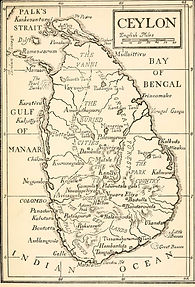
Located in the southwestern part of Sri Lanka, the Ratnapura region, whose name literally means “City of Gems”, is recognized as the country’s primary center for gemstone extraction. This area, characterized by a humid tropical climate and a geology rich in alluvial deposits, represents one of the most emblematic settings for gemmological study of sapphires, spinels, garnets, chrysoberyls, and occasionally even rubies. For centuries, Ratnapura has played a central role in the international gemstone trade, particularly for its renowned high-quality sapphires.
The mining landscape of Ratnapura is defined by a multitude of artisanal mines, typically hand-dug into clay-rich terrains containing gem-bearing gravels. Extraction relies mainly on traditional techniques passed down through generations: digging narrow shafts reinforced with wooden structures, removing alluvial layers using simple tools, and bringing the sediments to the surface. These gravels are then washed in pits or using rotating baskets, allowing the densest minerals to be concentrated before careful manual sorting.
This environment provides a unique opportunity to observe in situ the processes of gemstone extraction and treatment, in a context where mechanical intervention remains limited. During field explorations conducted in the Ratnapura region, numerous samples of sapphires, spinels, and other gemstones were collected directly from local mining operations. Sapphires, in particular, display a remarkable range of colors, from classic blue to yellow, pink, and sometimes the highly sought-after orangy-pink variety known as “padparadscha.”

Particular attention was given to the study of internal inclusions present in these Sri Lankan gemstones. Using a gemmological microscope, a wide variety of features were observed, including fluid inclusions, rutile needles, and so-called “fingerprint” inclusions—valuable indicators for understanding the characteristics and formation of Sri Lankan sapphires.
Some of the photographs taken were later included in the chapter of Internal Features of Gemstones, illustrating and supporting the identification of a Sri Lankan geographic origin.


