

The Secrets of Photomicrography Revealed
The art of photomicrography
PHOTOMICROGRAPHY FOR GEMOLOGISTS
Today, gemology relies heavily on sophisticated laboratory instruments such as Fourier-transform infrared spectroscopy (FTIR), photoluminescence, UV-Vis-NIR spectroscopy, laser ablation LA-ICP-MS, and LIBS. Despite their extreme precision—capable of quantifying elements down to ppm or even ppb levels—gemology cannot do without the microscope.
Inclusions, through their shape, appearance, abundance, or absence, are essential indicators in gemstones. They also represent a fundamental pillar in the learning and transmission of gemological knowledge.


Without photomicrography, gemology as we know it would largely remain confined to certain laboratories, where observations would be shared only internally. Photomicrography thus serves as a true “visual memory,” transcending time and enabling the transmission of knowledge across generations.
The photomicrographer explores the surfaces and internal structures of gemstones using a microscope, producing images that reveal information invisible to the naked eye. Today, a skilled professional gemologist produces their own photomicrographs and builds a personal database, which can be consulted in cases of doubt or to refine analyses.
These images also help highlight new synthetic materials, emerging treatments, and new geographic sources, facilitating the identification of recently introduced materials. Thanks to numerous articles and reference works—such as Photoatlases, as well as my recent books Emerald Inclusions and Internal Features of Gemstones, each containing more than 1,000 photomicrographs—gemologists can stay up to date or rely on solid references in cases of uncertainty.

History and Evolution of Photomicrography in Gemology
The need to document the microscopic world of gemstones dates back to the early 20th century, when hand-drawn sketches were used to illustrate inclusions. Gradually, photomicrography developed, notably through black-and-white images such as those presented in the work of French researcher George Deicha, Les lacunes des cristaux et leurs inclusions fluides.
Over time, publications such as Photoatlas of Inclusions in Gemstones (Volume 1) marked a major step forward, with images captured using film cameras. These were progressively replaced by increasingly advanced digital equipment, leading to the emergence of modern digital microscopes such as those from Keyence, used, for example, to produce the images in Emerald Inclusions.

Capturing images of inclusions requires great patience, along with keen observation skills and creativity. The gemologist-photomicrographer must know how to highlight inclusions, make images readable, choose the appropriate magnification, and master suitable lighting techniques.
Given the often high value of gemstones, it is impossible to own every specimen displaying scientifically relevant inclusions. Photomicrography makes it possible to document any important microscopic feature without systematically acquiring the stones themselves. Over time, this allows the creation of a true “visual library,” useful both as a reference tool for identification and as material for lectures or presentations.
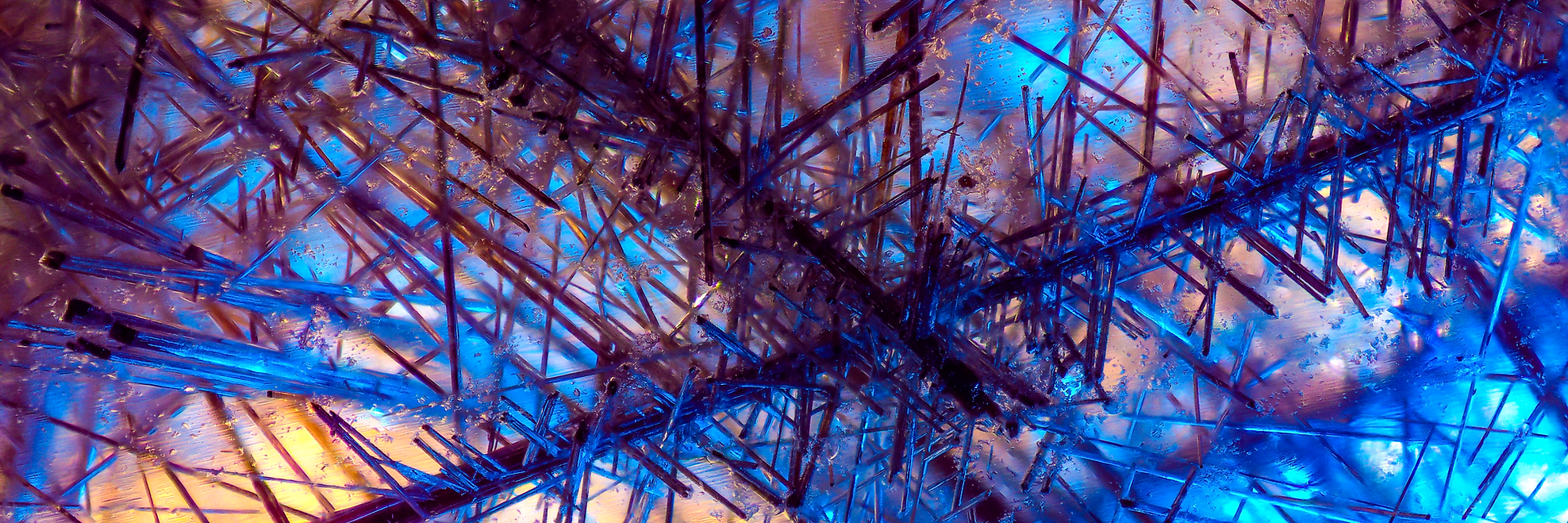
Some images, due to their aesthetic qualities, may even go beyond the scientific realm and offer an artistic dimension accessible to a broader audience, including non-specialists.
In practice, several elements are essential: sample cleanliness, perfect microscope stability, and a deep understanding of light–inclusion interactions. These factors help determine the most effective lighting methods to achieve high-quality images. Image processing is also crucial, including focus stacking, color adjustments when necessary, and the removal of unwanted elements such as dust.
.png)
Photomicrography vs. Microphotography
The terms “photomicrography” and “microphotography” are not synonymous and should not be confused. The scientifically correct term for imaging through a microscope is photomicrography. In contrast, microphotography refers to the process of reducing a macroscopic image to a size too small to be seen with the naked eye (for example, in certain reproduction or printing techniques).
Taking Great Images: The Four Pillars
Producing photomicrographs of gemstone inclusions relies on several fundamental steps:
-
Strong scientific and gemological knowledge of the subject
-
High-quality microscope optics
-
Mastery of lighting techniques
-
Access to well-documented, high-quality samples
First, the photomicrographer must have a solid practical understanding of inclusions and their behavior under different lighting conditions. This expertise is developed through specialized literature (such as Gems & Gemology and Journal of Gemmology) and reference books like The Photoatlas of Inclusions in Gemstones (Gübelin & Koivula, 1986), Internal Features of Gemstones, and Emerald Inclusions.
Optical quality is the second key factor—there is no substitute for high-end optics. Over the years, I have developed an optimized microscope setup offering an excellent quality-to-price ratio (see microscope section). This system was used to produce nearly all images in Internal Features of Gemstones. A well-designed and tested setup saves considerable time; it took me nearly five years to achieve this configuration.
Practical Aspects
Vibration Control
Vibrations are a major obstacle to sharp imaging. Equipment must be placed on a stable, rigid surface, free from disturbances.
Equipment
Choosing the right equipment is critical. The microscope is the most expensive component, followed by the camera and lighting system. I use semi-flexible bifurcated fiber optics (often two, sometimes four), as well as various internal and external light sources (darkfield, polarized light, etc.). To date, there is no perfect turnkey solution for colored stone photomicrography, making system optimization essential.

Adapting the Stone
Time is valuable, so mistakes should be avoided. Before using a digital or monocular microscope, it is recommended to observe the gem with a standard optical microscope to determine the optimal angle, magnification, and lighting.
If the sample is of low value, repolishing or adjusting surfaces may improve imaging conditions.
Working Cleanly
Cleanliness is essential in photomicrography. Dust, fingerprints, or grease on lenses, sensors, or samples can create unwanted artifacts.
Optical equipment must be handled carefully, protected when not in use, and cleaned with appropriate products. Gemstones (except sensitive materials such as opal, pearls, or amber) can be cleaned with isopropyl alcohol (IPA 99.9%) and wiped with a microfiber cloth. Optics should never be cleaned dry; specialized lens solutions and lint-free paper should be used to avoid scratches.
Lighting Techniques in Photomicrography
Mastering light (intensity, direction, diffusion) is essential for producing high-quality images.
Fiber Optic Lighting
Introduced in gemology in the late 1970s, fiber optic lighting is now indispensable. It allows illumination from nearly any angle and reveals spectacular effects, especially in fractures, cleavages, or fluid inclusions. Some inclusions are only visible under this lighting (e.g., rosettes in rubies, multicolored fluid channels in sapphires, “snake skin” in emeralds). It is also useful for examining surfaces and detecting treatments (oiling, fracture filling, coatings). Light intensity can be adjusted.
Darkfield Illumination
Widely used for diamond grading, darkfield illumination is a classic technique. However, for colored stones, it is often less effective than fiber optic lighting, though still essential for certain applications, particularly diamonds.
Transmitted Light
Direct transmitted light involves passing light through the gemstone. Its use is limited, as it does not always reveal all details. Diffused transmitted light, however, is more useful: by using a filter (tracing paper, fabric, diffusing glass), it provides even illumination and enhances contrasts, especially for detecting treatments such as diffusion.
Polarized Light
Often underestimated in gemology, polarized light is essential for revealing many internal structures. It allows observation of optical effects otherwise invisible. Its implementation is simple: two polarizing filters placed on either side of the gemstone are sufficient. This technique opens a rich field of observation in both color and information.
Ultraviolet Lighting
UV light requires caution, as it can be harmful to the eyes; proper protection is essential. Some inclusions or treatments exhibit fluorescence under UV (e.g., certain quartz, petroleum-bearing fluorite, or resin-treated emeralds). This technique is particularly useful for detecting and characterizing treatments or specific internal features.
Immersion
Full immersion in a high refractive index liquid, such as methylene iodide, can be useful in specific gemstone identification cases. However, this technique is relatively uncommon and, in my opinion, of limited practical use in daily gemological work.
Its use involves many constraints: methylene iodide is toxic, requires strict precautions (gloves, respiratory protection, ventilation), a horizontal microscope, and it degrades over time. As an alternative, coconut oil can be used as a safer and simpler solution. Although less effective, it still provides useful observations without specialized equipment or significant health risks (for example, with cobalt-glass-filled sapphires or amethyst under crossed polarizers).
When dealing with rough crystals or heavily worn gemstones, the surface may be too scratched or poorly polished. Instead of repolishing, a semi-immersion technique—applying a small drop of fluid with a refractive index close to that of the gemstone—can be highly effective. It makes surface scratches nearly invisible while significantly reducing fluid use, odors, and risks.
Conclusion
In conclusion, the absence of visible inclusions to the naked eye does not mean they do not exist. Microscopy reveals extremely fine details, sometimes on the order of a few tens of microns or even less.
For the photomicrographer aiming to reveal these invisible features, the use of a high-performance microscope, combined with a quality camera and proper lighting, is essential. A gemologist practicing photomicrography holds a clear advantage over one who does not.
It is difficult to overlook this fundamental aspect of gemology. Building, enriching, and sharing an image database is crucial. As gemology is a comparative science, it is essential to rely on photographs of inclusions. These serve as true witnesses of crystallization processes, preserved within gemstones for tens of millions or even billions of years.
.png)